
Cultural Immersion in Morocco: The Complete 2026 Guide

 https://images.prismic.io/natouris/aZn9VMFoBIGEgnol_CulturalImmersioninMoroccoTheOnlyGuideYou%27llEverNeed-2026Edition-.webp?auto=format,compress&rect=0,17,1000,525&w=1200&h=630
Morocco doesn't ease you in gently. The moment you step off the plane, it grabs you by the senses, layers you in spice-smoke and call to prayer, and dares you to keep up. Cultural immersion in Morocco isn't a box to tick on your travel checklist. It's a full-body experience, one of the last places on Earth where ancient civilization and daily life are genuinely indistinguishable. This guide is your insider roadmap, covering the best cities, homestay experiences, Moroccan traditions, Arabic immersion, and everything you need to go deeper than the Instagram surface.
Why Morocco Is the World's Best Destination for Cultural Immersion Right Now
A lot of countries claim "authenticity." Morocco actually delivers it.
Here's what sets it apart: you have a country where Berber culture stretches back 4,000 years, Islamic heritage saturates every wall and archway, and the Atlas Mountains still shelter villages untouched by mass tourism. You can sip mint tea with a carpet weaver in the Marrakech medina at 10am, ride a mule through a High Atlas trek by afternoon, and dine under a billion stars in the Sahara desert by nightfall.
For digital nomads and international travelers in 2026, Morocco also makes practical sense. It's a short flight from London, Madrid, or Paris. The cost of living is low. And unlike many "off-the-beaten-path" destinations that require months of planning, Morocco is accessible, well-connected, and safe for solo travelers and families alike.
Is Morocco Safe for Cultural Immersion Travel in 2026?
Let's address this upfront, because it's the question every first-timer asks.
Yes. Morocco is safe for cultural immersion travel in 2026. The country has invested heavily in tourism infrastructure and has a consistent safety record for international visitors. The U.S. State Department and UK Foreign Office both rate Morocco as generally safe, with standard travel precautions recommended.
A few practical notes:
- Petty theft can occur in crowded medinas. Keep your phone in a front pocket and your bag close.
- Harassment in tourist areas is real but manageable. A firm, polite "la shukran" (no thank you) usually works.
- Women travelers should note that solo female immersion travel is absolutely doable, especially on organized cultural programs. Dressing modestly in medinas reduces unwanted attention significantly.
The key is preparation, not paranoia. Morocco rewards the bold.
Best Cities for Cultural Immersion in Morocco
Not all Moroccan cities offer the same depth of experience. Here's a quick breakdown:
City Best For Immersion Level Fez Islamic heritage, artisan culture ⭐⭐⭐⭐⭐ Marrakech Souk culture, cooking, nightlife ⭐⭐⭐⭐ Chefchaouen Berber mountain culture ⭐⭐⭐⭐ Rabat Arabic language programs, modern Morocco ⭐⭐⭐⭐ Essaouira Gnawa music, coastal culture ⭐⭐⭐ Zagora / Merzouga Sahara desert culture, nomadic traditions ⭐⭐⭐⭐⭐
Fez: The Medina That Refuses to Change
If Marrakech is Morocco's showroom, Fez is its soul. The Fez medina cultural immersion activities available here are unmatched anywhere in the Arab world. The medina, a UNESCO World Heritage Site, contains over 9,000 narrow streets that haven't changed their layout since the 13th century.
Watch leather tanners work in the famous tanneries from above. Learn zellige tilework from a master craftsman. Walk into a 14th-century madrasa and feel nine centuries press against your chest.
Fez is also home to the world's oldest continuously operating university, the University of al-Qarawiyyin, founded in 859 AD. That alone tells you what kind of city you're in.
Marrakech: Where the Senses Negotiate a Surrender
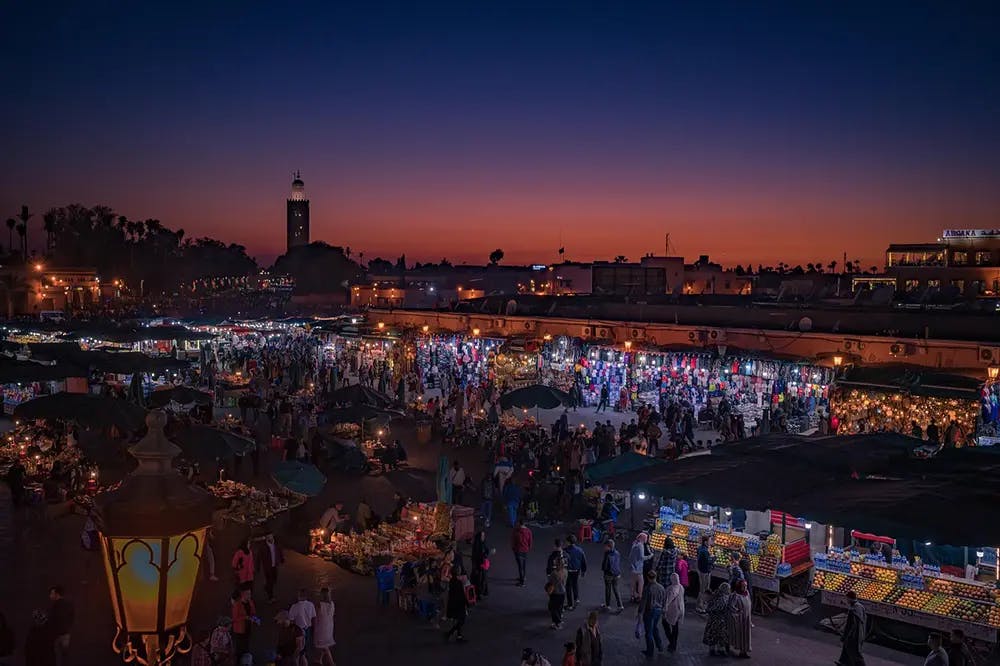
The Marrakech souk cultural immersion tour experience is the one most travelers start with, and for good reason. Jemaa el-Fna square is a living theater: snake charmers, storytellers, and juice vendors operating in a centuries-old tradition of public performance.
But the real Marrakech is in the side streets. Find a hammam that doesn't cater to tourists. Hire a local guide from a neighborhood association rather than a hotel concierge. The difference in experience is staggering.
Rabat: The Arabic Immersion Headquarters
Less glamorous than Fez or Marrakech, Rabat is where serious language learners come. Rabat Arabic language immersion summer programs have grown significantly, with several universities and private institutes offering structured Darija (Moroccan Arabic) and Modern Standard Arabic courses for foreigners. If learning Moroccan Arabic is part of your immersion goal, Rabat is your base.
Morocco Homestay Experiences: Where Immersion Gets Real
Nothing puts you inside a culture faster than sleeping in it.
Morocco homestay experiences range from urban riads in Fez to farmhouses in the Ourika Valley to Berber village homestays in the Atlas Mountains. The homestay experience in rural Morocco is particularly transformative: you wake to the smell of fresh khobz bread, help prepare breakfast using the family's olive oil, and spend evenings learning card games you'll never find on Google.
Key things to know before booking a homestay:
- Book through a reputable cultural program rather than random listings. Organizations like Cultural Experiences Abroad (CEA) and various Morocco study abroad cultural programs vet hosts and provide support.
- Expect communal meals. This is where the real cultural exchange happens. Come hungry, come curious, and ask about every dish.
- Learn a few phrases in Darija before you arrive. Even "shukran" (thank you) and "bsaha u raha" (bon appétit) will earn you immediate warmth.
The Berber village homestay Atlas Mountains experience deserves its own mention. Villages like Imlil, Aït Benhaddou, and Tizi Ouzou offer structured programs where you stay with Amazigh (Berber) families, participate in daily farming, and trek into the High Atlas with local guides. This is the purest form of Morocco cultural immersion available.
Traditional Moroccan Activities for Immersion
Moroccan Cooking Classes: The Fastest Way Into a Culture
Food is the universal language, and Morocco's culinary tradition is extraordinarily rich. Moroccan cooking classes cultural experience sessions are available across all major cities, but the best ones go beyond just recipes.
Look for classes that take you to the souks first. Haggling for ras el hanout at a spice stall, learning to identify the 27 ingredients in a tagine blend, understanding why preserved lemons take 30 days to make, these are the moments that stick.
Top formats:
- Half-day market + cooking class (Marrakech, Fez): Great intro, USD 40-80 per person
- Full-day immersive cooking with a local family (rural areas): USD 60-120, includes lunch and cultural context
- Multi-day culinary immersion retreat: USD 800-1,800 for 5-7 days, includes accommodation
Traditional Moroccan Festivals: Timing Your Trip
Traditional Moroccan festivals immersion is one of the most underrated ways to experience the country. Some key dates for 2026:
- Eid al-Adha (June 2026): The biggest Islamic celebration of the year. If you're in Morocco, you'll witness something deeply moving.
- Fez Festival of World Sacred Music (May/June): A UNESCO-recognized festival with Sufi performances, qawwali, and cross-cultural music.
- Moussem of Tan-Tan (variable): A massive gathering of Saharan nomadic tribes, recognized by UNESCO as Intangible Cultural Heritage.
- Gnaoua World Music Festival, Essaouira (June): West African, Berber, and Arabic musical traditions in a coastal setting.
High Atlas Trek: Cultural Immersion on Foot
The High Atlas trek cultural immersion experience combines physical adventure with genuine human connection. The trails between Imlil and Toubkal aren't just scenic, they pass through villages where mule transport still dominates, where women weave on traditional looms outside their doors, and where the pace of life operates on mountain time.
Hire a certified local guide from the Imlil Guide Association. They're licensed, deeply knowledgeable, and their fees directly support local families.
Sahara Desert Cultural Immersion: The Experience That Rewires You
The Sahara desert cultural immersion Morocco experience is in a category of its own. Spending even two nights in the Erg Chebbi dunes near Merzouga does something to a person. The silence is absolute. The stars are obscene in their abundance.
But beyond the visual drama, the Sahara is home to nomadic Amazigh and Sahrawi communities with oral traditions, musical forms, and hospitality rituals that predate Islam. A well-organized desert camp will connect you with these traditions: mint tea ceremonies, Gnawa drum sessions, storytelling around a fire.
Avoid the mega-camps that pack 300 tourists into luxury tents. Instead, look for small operators (8-12 guests maximum) that work directly with local Amazigh communities.
How to Learn Arabic During Morocco Immersion Programs
Moroccan Arabic (Darija) is a dialect distinct enough from Modern Standard Arabic that even native Arabic speakers sometimes struggle with it. For immersion travelers, learning Darija is both a practical skill and a cultural key.
Options for learning Moroccan Arabic during your stay:
- University programs: Mohammed V University in Rabat and Al Akhawayn University in Ifrane both offer summer Arabic programs for foreigners.
- Private language schools: ALIF (Arabic Language Institute in Fez) is one of the most respected, offering intensive courses from 2 weeks to a full semester.
- Immersion through homestay: The fastest and cheapest method, if you're disciplined about it. Pair this with a phrasebook and daily conversation practice.
Even basic Darija dramatically deepens your immersion experience. Locals respond differently when you try. Not just warmly, but openly.
How Much Does a Morocco Cultural Immersion Tour Cost?
Budget planning is non-negotiable, so here's a realistic breakdown:
Experience Type Duration Approximate Cost (USD) Budget backpacker self-guided 2 weeks $600-900 Mid-range cultural tour (guided) 10 days $1,200-2,000 Premium immersion program (homestay + classes) 2-4 weeks $2,500-5,000 Language + cultural program (Rabat/Fez) 1 month $3,000-6,000 Luxury private immersion experience 10 days $5,000-12,000
Flights from the UK and EU typically range from $150-400 return. From the US East Coast, expect $500-900. Morocco's internal transport is cheap: trains, CTM buses, and shared grands taxis are all affordable and reliable.
If you're already traveling Asia on a budget, you'll find Morocco a comparable or cheaper destination. For more on managing travel finances on the road, check out Natouris' guide to passive income strategies for digital nomads, which applies directly to slow-travel immersion trips like this one.
Visa Requirements for Cultural Immersion in Morocco
Morocco is refreshingly easy to enter for most Western travelers.
- US citizens: Visa-free for up to 90 days
- UK citizens: Visa-free for up to 90 days
- EU citizens: Visa-free for up to 90 days (most nationalities)
- Passport validity: Must be valid for at least 6 months beyond entry date
For stays longer than 90 days (common for language program students), you'll need to apply for a residency authorization (carte de séjour) through the local prefecture. Cultural immersion programs Morocco 2026 providers like ALIF and CEA typically help students navigate this process.
What to Pack for Morocco Cultural Homestays
Packing for a cultural homestay requires more thought than packing for a resort. Here's the essential list:
- Modest clothing: Long pants, loose tops, and a headscarf (for women, optional but respectful). This applies in medinas and rural areas especially.
- Comfortable walking shoes: Medina streets are uneven cobblestone. Blisters are a real threat.
- A small gift for your host family: Sweets, quality tea, or a small item from your home country go a long way.
- Offline translation app: Google Translate works with downloaded Moroccan Arabic packs. A lifesaver.
- A stomach for adventure: Morocco's street food is extraordinary but unfamiliar. Cipro is optional but some travelers bring it as a precaution.
- Universal power adapter: Morocco uses Type C and E plugs (European standard).
For a comprehensive gear list tailored to adventure travel, this must-have travel gear guide covers the core essentials that translate across most global destinations.
How to Respect Local Customs During Immersion in Morocco
This is where many travelers get it wrong, not out of malice, but out of ignorance. Morocco is a predominantly Muslim country with specific social codes that, when respected, transform how locals engage with you.
Key customs to observe:
- Ramadan etiquette: If you're visiting during Ramadan, avoid eating, drinking, or smoking in public during daylight hours. It's not just polite, it's the law in some areas.
- The right hand rule: Always accept food, gifts, or handshakes with your right hand. The left hand carries a specific cultural meaning you don't want to invoke.
- Photography: Always ask before photographing people, especially women. "Mumkin tsawwer?" means "May I take a photo?"
- Shoes off at the entrance: In homes and some riads, shoes come off at the door. Follow your host's lead.
- Bargaining etiquette: In souks, bargaining is expected and is a social ritual, not combat. Start at 40-50% of the asking price and enjoy the process.
Best Time of Year for Cultural Immersion in Morocco
Morocco has a climate as varied as its landscape. Here's how to match your timing to your goals:
- March to May: Ideal. Mild temperatures, spring blooms in the Atlas, and pre-summer crowds. Best for trekking and festival travel.
- June to August: Hot in the interior (Fez, Marrakech can hit 40°C+). Best for coastal Essaouira or the Sahara at night. Arabic language summer programs peak in July-August.
- September to November: Arguably the best all-around window. Temperatures drop, post-summer crowds thin, and the light is extraordinary.
- December to February: Cold in the Atlas (skiing is possible near Oukaimeden), quieter medinas, and lower prices. Authentic winter Morocco.
For travelers who enjoy timing trips around festivals, this Asia festival travel guide offers a useful framework for festival-based travel planning that applies equally well to Morocco's rich calendar.
The Honest Takeaway: What Cultural Immersion in Morocco Actually Demands
Here's something travel guides won't always tell you: true cultural immersion is uncomfortable. Not dangerous. Not unpleasant. But genuinely uncomfortable in the way that only happens when you're operating outside your own cultural logic.
You will get lost in the Fez medina. Someone will invite you for tea and you won't know if it's genuine hospitality or a sales pitch (it's often both, and that's okay). You'll sit through a meal where you can't read anyone's expression. You'll try to say something in Darija and mispronounce it so badly the whole family laughs.
This is the immersion. This is exactly where the education happens.
Morocco doesn't reward passive consumption. It rewards presence, curiosity, and a genuine willingness to sit with the unfamiliar. Come prepared, come respectful, and come ready to be changed.
Your Cultural Immersion in Morocco Starts With One Decision
Cultural immersion in Morocco is one of the most complete travel experiences available to the modern traveler. From the labyrinthine Fez medina to the silence of the Sahara, from a Berber cooking class in the Atlas to a Sufi ceremony in Marrakech, this country offers layers of human civilization that most destinations can only gesture toward.
The practical barriers are low: easy visas, affordable costs, short flights from Europe, and an established infrastructure of immersion programs. The experiential return is extraordinarily high.
The only thing left is to go.
Book a reputable homestay, sign up for a language program, or join a small-group cultural tour for 2026. The medina doesn't wait, and neither should you.
Have questions about planning your Morocco cultural immersion trip? Drop them in the comments below, or share your own experience. The best travel advice still travels mouth to ear.
Share this article