
Pekoe Trail Stage 2: Galaha to Loolkandura Hiking Guide

 https://images.prismic.io/natouris/aYSsvd0YXLCxVcUa_PekoeTrailStage2Thumbnail.webp?auto=format,compress&rect=0,9,1000,525&w=1200&h=630
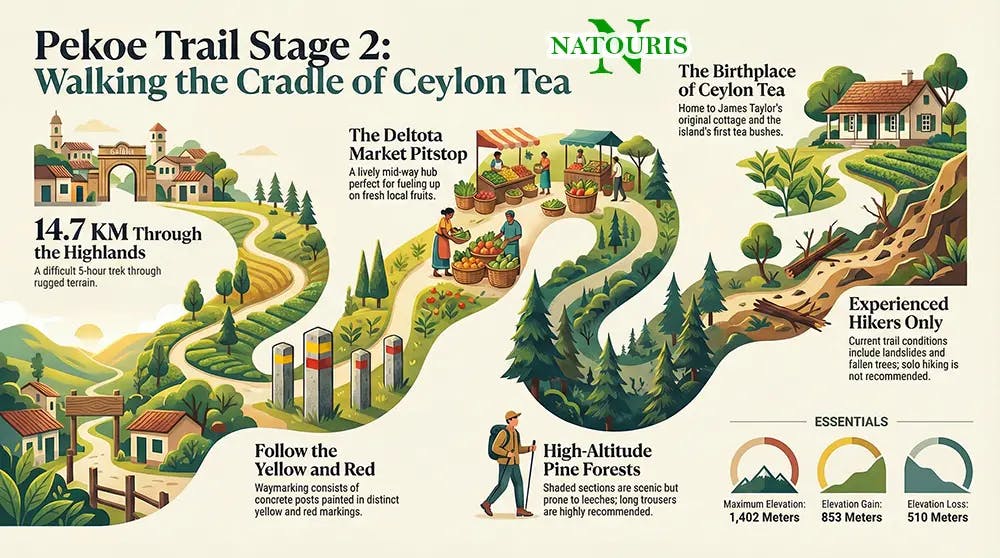
Every morning, millions of people worldwide sip Ceylon tea without knowing the mountain trails their tea traversed. Pekoe Trail Stage 2, the 14.7-kilometer stretch from Galaha to Loolkandura, isn't just another hiking segment. It's Ground Zero for the global tea industry. This is where Scottish pioneer James Taylor planted the first commercial tea bushes in the 1860s, transforming Sri Lanka's identity forever. If you're hiking the Pekoe Trail Sri Lanka complete route, this stage is the spiritual heart. You'll walk forgotten colonial roads, navigate multi-ethnic markets, dodge leeches in pine forests, and stand at the exact spot where an empire began.
What Makes Pekoe Trail Stage 2 Special?
This isn't your typical jungle trek. Stage 2 delivers history, culture, and terrain diversity that few trails globally can match.
The Historical Heavyweight
You're literally walking through a living museum. The Loolecondera Estate (now Loolkandura) was James Taylor's experimental ground in the 1860s. The tracks beneath your boots are the same routes used to haul the first tea yields toward Kandy markets. These aren't paved tourist paths. They're remnants of the "old Dimbula Road," engineered with 19th-century stonework and gradients designed for bullock carts.
Taylor's cottage still stands, a short detour from the main trail. Standing there, you realize you're on the fertile soil that birthed a $1.5 billion annual industry.
Religious Kaleidoscope
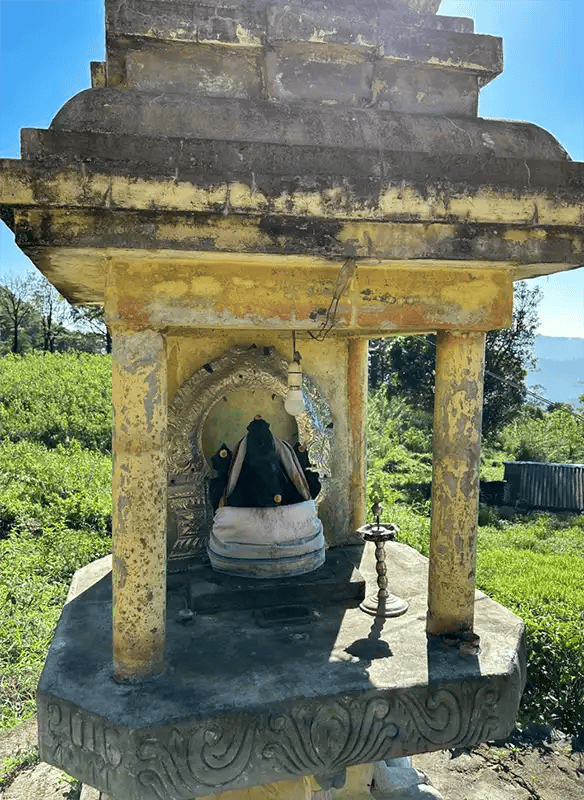
Few trails compress Sri Lanka's religious diversity like this one. Before you even start in Galaha, you'll pass a serene Buddhist statue overlooking the valley. Deltota town anchors the mid-section with its striking green mosque and vibrant market murals. Push deeper into the estate, and colorful Hindu Kovils (shrines) appear, serving the Tamil plantation workers who've lived here for generations.
A particularly vivid shrine greets you at the bridge near the trail's end, a visual reminder that this path connects Sinhalese, Muslim, and Tamil communities who've coexisted for over a century.
Pekoe Trail Stage 2 Itinerary Map: The Route Breakdown
| Waypoint | Distance from Start | Elevation | Key Features |
| -------------- | ------------------------- | --------------- | ------------------ |
| Galaha Post Office | 0 km | 580m | Starting point, bus connections to Kandy |
| Deltota Market | ~5 km | 720m | Green mosque, snacks, fruit stalls, murals |
| Pine Forest Section | 6-8 km | 950m | Leech territory, dense rainforest |
| James Taylor Cottage | ~10 km | 1,100m | Historic site, short detour |
| Loolkandura Info Center | 14.7 km | 1,402m (max elevation) | Toilets, trail pass checkpoint |
The trail climbs steadily, gaining over 800 meters. The topography shifts from bustling lowland markets to misty high-elevation rainforest. GPS navigation is essential, especially through the twisting estate roads around Deltota.
Galaha to Loolkandura: Step-by-Step Navigation
Starting Strong in Galaha
After completing Pekoe Trail Stage 1, you'll arrive at Galaha Post Office, your official starting point. Here's where the "Local Advice Paradox" begins.
Well-meaning locals will suggest taking the main asphalt road toward Deltota. It's faster. It's easier. Ignore them. The official guide is explicit: stay left toward the estate roads. The main road offers zero soul. The estate path rewards you with sweeping views of the Hanthana mountain range, intimate tea plantation scenes, and the authentic trail atmosphere you came for.
Deltota Market: Your Mid-Trail Oasis
Around the 5-kilometer mark, Deltota town appears like a colorful mirage. The green mosque dominates the skyline. The market buzzes with energy, fresh fruit, and cheap snacks (think 50-cent roti and sugary tea). Stock up here. The next 10 kilometers have zero commercial facilities.
The market murals are Instagram gold, but more importantly, this is your last chance for reliable water refills before the estate climbs.
The Pine Forest Gauntlet (6-8 km)
This section separates casual hikers from committed trekkers. The trail enters dense, high-elevation rainforest. The air thickens. The mud deepens. And the leeches emerge.
Leech socks aren't optional here. They're psychological armor. Without them, every rustle in the undergrowth becomes a paranoia trigger. With them, you can actually appreciate the otherworldly beauty of the pine canopy filtering misty light.
Pro tip: Use the "Trekking Pole Tactic." Scan overgrown grass ahead with your poles. It alerts snakes (rare but present) and helps you spot leeches before they latch.
James Taylor Cottage and the First Plantations
Around the 10-kilometer mark, a small sign directs you uphill toward James Taylor's cottage. It's a short, steep detour, maybe 200 meters. Worth every step.
The cottage is modest, almost underwhelming. But context transforms it. This is where a lone Scotsman defied conventional wisdom, experimented with tea varietals at altitude, and triggered a cascade that would employ millions and define a nation's economy.
The surrounding plantations are the direct descendants of those first experimental bushes. You're looking at a 160-year-old legacy, still producing leaves for your morning brew.
Pekoe Trail Stage 2 Difficulty: What to Actually Expect
The official rating is "difficult" for both forward and reverse directions. Let's break down what that means in practice.
Elevation and Terrain
- Total climb: ~800 meters over 14.7 km
- Average gradient: 5.4%, with sections hitting 12-15%
- Surface: Mix of dirt estate roads, narrow footpaths, occasional stone steps
For comparison, this is tougher than most day hikes in Europe's Alps but easier than Nepal's Annapurna Circuit daily stages. If you can comfortably hike 15 kilometers with a day pack on uneven terrain, you'll manage.
The Real Challenges
Leeches: Not dangerous, just psychologically exhausting. They're most active after rain in the pine forest section. Check your legs every 30 minutes.
Dogs: Estate homes employ aggressive guard dogs. They bark intimidatingly but rarely attack. Walking confidently past them (without running) usually works. Carry a trekking pole as a visual deterrent.
Navigation: The estate roads around Deltota twist unpredictably. Without GPS, you'll get lost. Download the offline Pekoe Trail GPS app ($10 trail pass includes access). Look for concrete posts painted yellow and red—these are your North Star.
Weather: Rain transforms dirt paths into slippery mud chutes. The dry seasons (December-April, July-September) offer safer conditions.
Time Investment
Most hikers complete Stage 2 in 5-6 hours, including short breaks. Fast trekkers can push it in 4 hours. If you're photographing or visiting James Taylor's cottage, budget 7 hours.
Pekoe Trail Stage 2 GPS App and Navigation Tips
The official Pekoe Trail app is non-negotiable. Yes, it costs $10 per day. Yes, it's worth every cent.
What the App Provides
- Turn-by-turn offline navigation
- Waypoint markers for water sources, viewpoints, historical sites
- Emergency contact numbers
- Real-time distance tracking
Without it, the estate roads around Deltota become a maze. Locals are friendly but often unfamiliar with the official trail route. They'll direct you to roads they use, which may add kilometers or miss key highlights.
Physical Markers
Watch for:
- Yellow and red concrete posts: Official trail markers
- Tea factory signs: Usually indicate you're on the right estate road
- Hindu Kovils: Near the trail's end, these confirm you're approaching Loolkandura
Practical Logistics: Public Bus, Permits, and Facilities
Getting to Galaha
From Kandy, buses to Galaha run every 30 minutes from the main bus stand (Route 652). The 30-minute ride costs around 50 rupees ($0.15). Tuk-tuks charge 800-1,000 rupees ($2.50-$3) but offer door-to-door convenience.
If you're exploring things to do in Kandy, starting Stage 2 early morning (6-7 AM) gives you optimal light and avoids midday heat.
Trail Pass Requirements
The $10 daily pass is mandatory for all stages. Purchase via the official app or at the Loolkandura Information Center. Revenue supports trail maintenance and local communities.
Facilities En Route
- Galaha: Small shops, no restaurants
- Deltota Market: Fresh fruit, snacks, basic meals, water
- Trail itself: Zero facilities for 10 km after Deltota
- Loolkandura Info Center: Clean toilets (a genuine luxury after 15 km), water, first aid
Carry minimum 2 liters of water, energy bars, and lunch. Deltota snacks won't sustain you through the pine forest climb.
Safety Considerations: Rain, Wildlife, and Common Sense
Weather Realities
Afternoon rain is common year-round. The trail becomes treacherous when wet. Steep sections turn into waterslides. If heavy rain hits, consider pausing under tree cover (away from isolated trees that attract lightning).
A lightweight rain jacket and waterproof pack cover are essential. Avoid cotton clothing—it stays wet and causes chafing. Quick-dry synthetics or merino wool perform better.
Wildlife Encounters
Leopards: Technically present in the hill country. Realistically, your chances of seeing one are near zero. They're nocturnal and avoid humans.
Snakes: More common but still rare. Most species are non-venomous. The trekking pole scanning method works. Don't put your hands on rocks or logs without looking first.
Leeches: Your actual adversary. They don't transmit diseases but can cause small wounds that bleed annoyingly. Salt or insect repellent on leech socks helps. Don't pull them off forcefully—use salt, heat, or let them finish feeding (gross but safest).
Solo Hiking Considerations
Stage 2 sees moderate foot traffic, especially on weekends. You'll encounter other trekkers, tea pickers, and estate workers. Solo female travelers report feeling safe, though the barking dogs can be unsettling.
If you're uncomfortable hiking alone, several operators in Kandy offer guided Pekoe Trail Stage 2 tours (around $50-$80 per person). They handle logistics and provide cultural context that enriches the experience.
For broader safety context about traveling in Sri Lanka, check this comprehensive safety guide.
Accommodation Options Near Loolkandura
Most hikers tackle Stage 2 as a day hike from Kandy. But if you're thru-hiking the Pekoe Trail or want to linger, a few options exist:
- Loolkandura Estate Bungalows: Colonial-era accommodation on working tea estates (book through estate management, around $40-$60/night)
- Homestays in Deltota: Basic rooms with local families ($15-$25/night)
- Kandy Base: Stay in Kandy and day-trip Stage 2 via early bus
The Loolkandura area is remote. Don't expect wifi, hot showers, or varied dining. It's authentic plantation living.
Why Pekoe Trail Stage 2 Reviews Are Unanimously Positive
Every trail has critics. Stage 2 doesn't. Here's why hikers rave:
Authenticity Overload
You're not walking a sanitized tourist trail. You're navigating working estates. Women tea pickers (mostly Tamil, mostly underpaid) work the slopes in frayed shirts and thick skirts, the same leech-protection strategy you're using. The "line rooms"—cramped worker housing—sit visible from the trail, a sobering reminder of the human cost behind your cup of tea.
This isn't poverty tourism. It's context. Understanding the Ceylon tea plantation system adds weight to every step.
The "Game of Thrones Wall" Moment
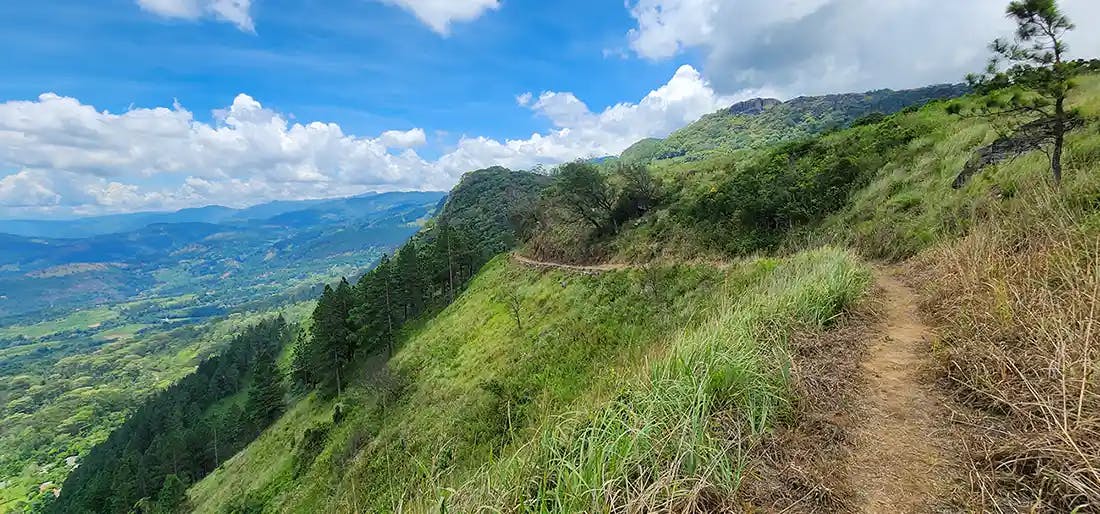
Around the 12-kilometer mark, you reach maximum elevation (1,402m). Turn around. The Pundaloya Valley spreads below, impossibly steep tracks carved into cliffs. The rock formations and rainforest ahead look genuinely insurmountable until you spot the trail winding through.
Hikers consistently compare this vista to "The Wall" from Game of Thrones. It's cinematic, dramatic, and photographs beautifully (morning light works best).
Historical Density
Few trails pack this much significance into 15 kilometers. You're walking colonial infrastructure, standing at the birthplace of a global commodity, crossing religious boundaries, and experiencing contemporary plantation life simultaneously.
It's intellectually stimulating in a way generic mountain hikes aren't.
Insider Tips from Repeat Hikers
- Start at 6 AM: You'll finish by noon, avoiding afternoon rain and heat
- Download offline maps: Cell coverage is patchy after Deltota
- Bring sealable plastic bags: For phones, cameras, snacks during rain
- Wear gaiters or leech socks: Non-negotiable in pine forest section
- Chat with tea pickers: Many speak English and love sharing stories (always ask permission before photographing)
- Pack out trash: Zero facilities means zero bins, carry a small trash bag
- Visit James Taylor's cottage: The 10-minute detour is mandatory for history buffs
Connecting Stage 2 to the Bigger Picture
If you're considering the full Pekoe Trail experience, Stage 2 serves as the philosophical anchor. Later stages offer more extreme terrain (Stage 7's Devil's Staircase) or more dramatic vistas (Stage 15's Horton Plains). But none carry the historical weight of standing where it all began.
For broader Sri Lanka travel planning, Stage 2 fits perfectly into a 10-14 day itinerary. Combine it with Kandy's cultural sites, the iconic train journey to Ella, and southern beaches for a comprehensive experience.
Digital nomads basing in Sri Lanka can treat the Pekoe Trail as weekend micro-adventures between work stints. The budget travel realities make it affordable even on tight remote-work budgets.
The Takeaway: Can You Truly Appreciate Tea Without This Walk?
Here's the uncomfortable truth Stage 2 forces you to confront: every commodity has a human cost. The tea in your cup traveled these exact slopes, carried by underpaid laborers descended from Tamil workers brought here under colonial indenture systems.
Walking Stage 2 doesn't absolve you of participating in that system. But it does give you context. You'll never sip Ceylon tea the same way again.
Is it the most extreme hike in Sri Lanka? No. Sri Pada (Adam's Peak) wins that title. Is it the most scenic? Debatable. But for sheer historical density, cultural immersion, and "origin story" significance, Pekoe Trail Stage 2 stands alone.
Ready to walk the birthplace of Ceylon tea? Download the Pekoe Trail app, purchase your $10 daily pass, lace up your boots, and prepare for 14.7 kilometers that will permanently change how you think about your morning brew. The trail from Galaha to Loolkandura isn't just a hike. It's a pilgrimage to Ground Zero of a global industry.
Share this article