
Freelancing While Traveling Digital Nomad Guide 2026

 https://images.prismic.io/natouris/aYHNj90YXLCxVTEd_FreelancingWhileTravelingDigitalNomadGuide2026Thumbnail.webp?auto=format,compress&rect=0,17,1000,525&w=1200&h=630
Here's the truth about freelancing while traveling: it's not about posting laptop-on-beach photos for Instagram. It's about mastering the art of delivering exceptional work from a Lisbon co-working space one week and a Bangkok rooftop the next, without your clients ever noticing the shift.
The digital nomad lifestyle has evolved from Silicon Valley fantasy to mainstream career path. In 2026, over 35 million people globally identify as location-independent workers, and that number climbs higher each quarter. But here's what the glossy travel blogs won't tell you: successful remote freelancing requires strategy, discipline, and some serious logistical finesse.
This guide cuts through the romanticized nonsense. You'll learn exactly how to build a sustainable freelance career while exploring the world, from visa requirements to time zone juggling.
The Reality of Remote Freelancing: What Actually Works
Let's start with the unsexy foundation. Work and travel isn't about escaping responsibility. It's about restructuring your professional life around mobility.
The most successful nomad freelancers share three core characteristics. They deliver consistently high-quality work regardless of location. They communicate proactively with clients. And they've built systems that function smoothly across continents.
Think of location-independent work as running a one-person corporation. Your product? Professional services. Your office? Wherever you park your laptop that day.
Can You Really Freelance Full-Time While Backpacking?
Absolutely, but "backpacking" is a misnomer here. The digital nomad community has largely graduated from hostel-hopping chaos to semi-permanent bases. Most successful traveling freelancers adopt a "slow travel" approach, spending 1-3 months per location.
Why? Constantly moving every few days destroys productivity. Finding reliable Wi-Fi, adjusting to new environments, and battling travel fatigue leaves little energy for client work. The sweet spot? Settling into a destination long enough to establish routines while maintaining flexibility.
Essential Gear for Traveling Freelancers
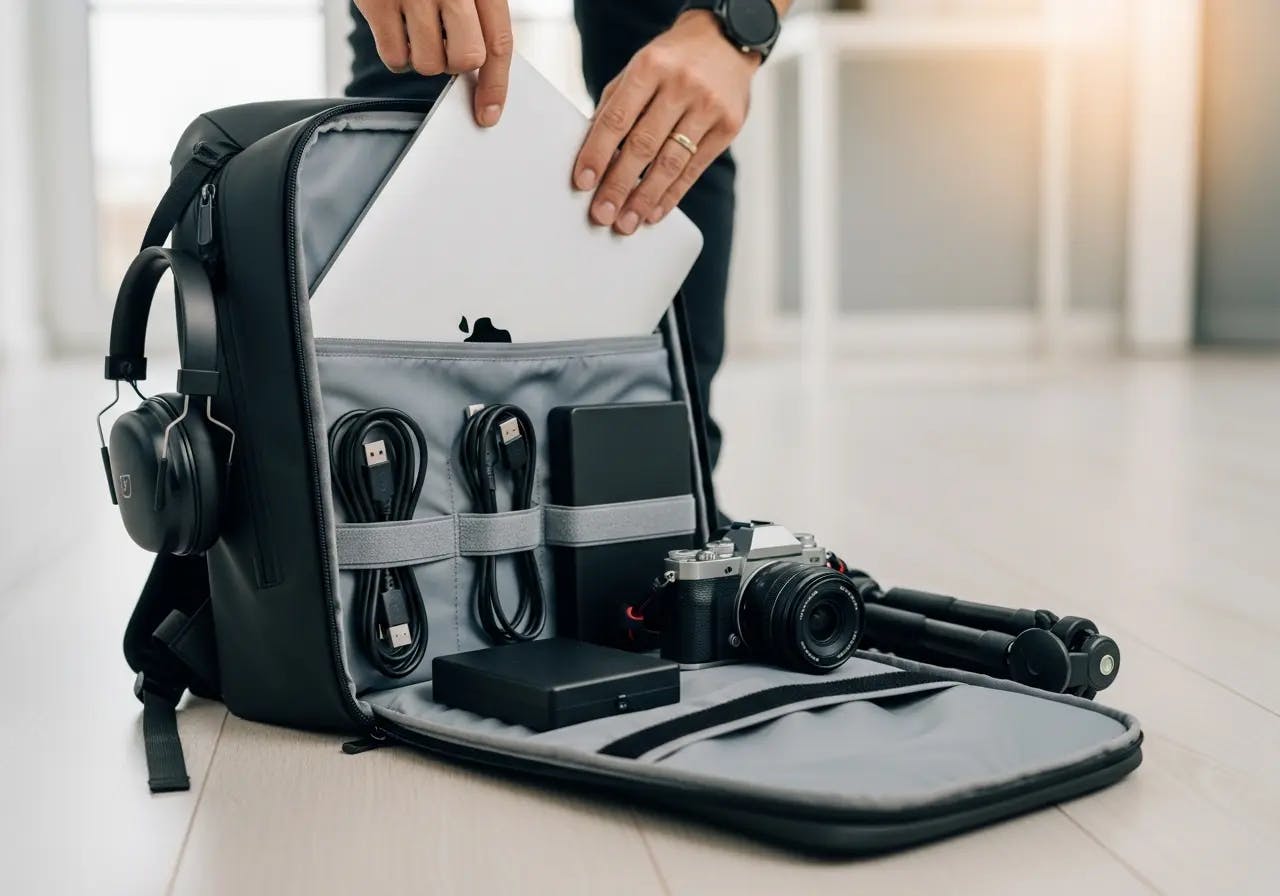
Your gear setup can make or break your nomadic career. Here's what actually matters:
The Non-Negotiables:
- Lightweight laptop with minimum 6-hour battery life (MacBook Air or similar ultrabook)
- Noise-canceling headphones for calls in chaotic environments
- Portable Wi-Fi hotspot device with international data plans
- Universal power adapter with USB-C fast charging
- External hard drive for backup (redundancy saves careers)
The Nice-to-Haves:
- Portable laptop stand to prevent neck strain
- Wireless mouse and compact keyboard
- Blue light blocking glasses for extended screen time
Total investment? Around $2,000 to $3,000 for quality equipment that lasts. Consider it the cost of your mobile office, significantly cheaper than traditional business overhead.
Internet Speed and Connectivity: The Make-or-Break Factor
Here's a hard rule: you need minimum 10 Mbps download and 5 Mbps upload for basic freelance work. Video calls require 25+ Mbps for stability. Anything less risks dropped client meetings and missed deadlines.
Before booking accommodation, research internet infrastructure. Use resources like Nomad List to check average speeds in specific cities. Message Airbnb hosts directly asking for speed test screenshots. Join digital nomad Facebook groups for real-time connectivity reports.
Is Public Wi-Fi Safe for Sensitive Work?
Short answer? No. Never conduct financial transactions or access sensitive client data on public networks without protection.
Invest in a quality VPN service (NordVPN, ExpressVPN, or Surfshark). This encrypts your connection and protects client confidentiality. It's non-negotiable for anyone handling proprietary information or financial data.
Most savvy freelancers avoid public Wi-Fi entirely, relying instead on mobile hotspots or private co-working spaces with secure networks.
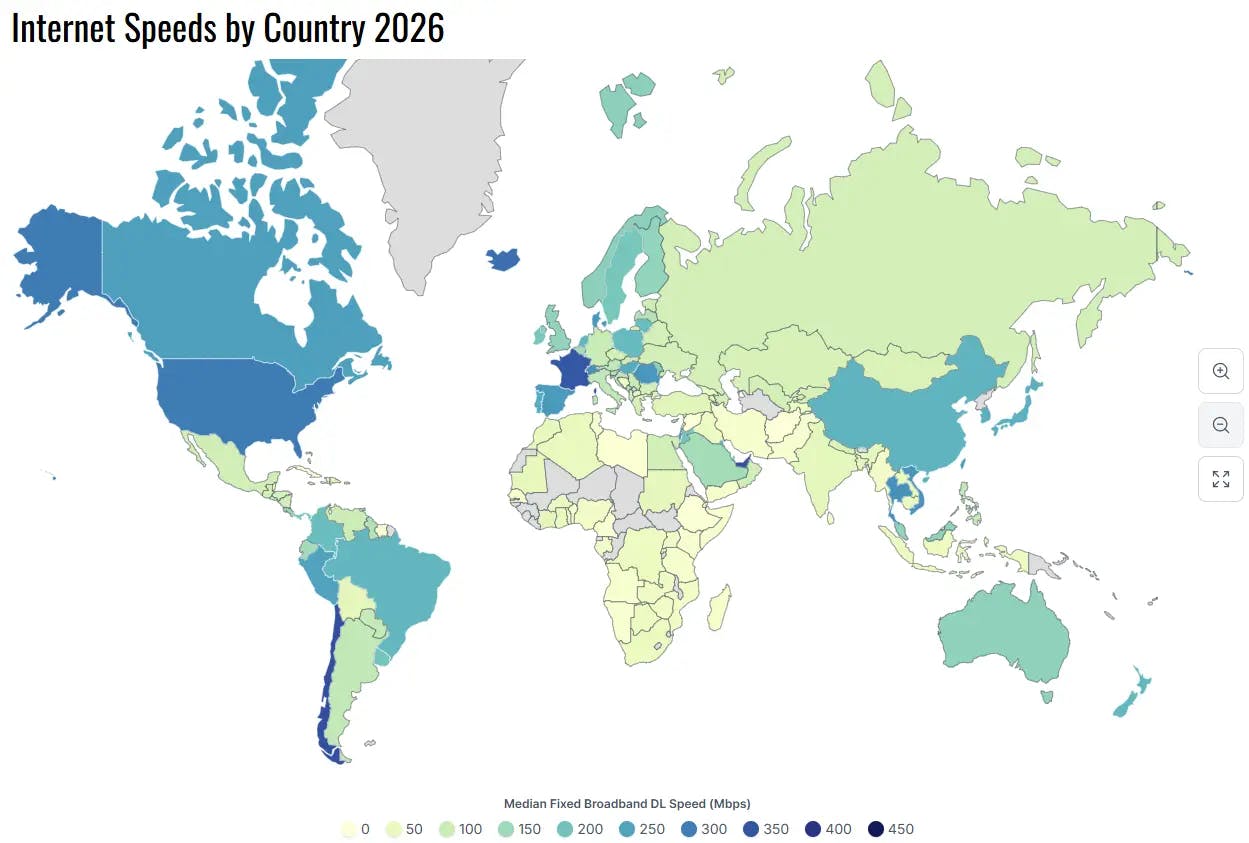
Get More Details: worldpopulationreview.com , speedtest.net/global-index
Managing Clients Across Time Zones
Time zone differences transform from obstacle to advantage once you master the system. The key? Asynchronous communication.
Structure your workflow around recorded video updates, detailed project management platforms (Asana, Trello, ClickUp), and comprehensive email check-ins. This reduces dependence on synchronous meetings and actually improves productivity.
When real-time calls are necessary, use scheduling tools like Calendly with automatic time zone conversion. Block out "overlap hours" when you're available for live communication with clients in different regions.
Pro tip: Position yourself strategically. European time zones overlap beautifully with both US East Coast mornings and Asian afternoons. Mexico City works perfectly for US clients. Thailand accommodates Australian and European schedules.
Best Countries for Freelancing Abroad in 2026
| Destination | Avg. Monthly Cost | Internet Quality | Visa Situation | Community Size |
|-----------------|----------------------|---------------------|-------------------|-------------------|
| Portugal (Lisbon) | $2,200 - $3,000 | Excellent | D7 Visa available | Very Large |
| Mexico (Playa del Carmen) | $1,500 - $2,200 | Good | 180-day tourist visa | Large |
| Thailand (Chiang Mai) | $1,000 - $1,500 | Good | 60-day visa-exempt | Very Large |
| Spain (Barcelona) | $2,500 - $3,500 | Excellent | Digital Nomad Visa | Large |
| Colombia (Medellín) | $1,200 - $1,800 | Good | 90-day tourist visa | Medium |
| Indonesia (Bali) | $1,300 - $2,000 | Fair to Good | Second Home Visa | Very Large |
These affordable destinations for remote work balance cost of living, infrastructure, and visa accessibility. Avoid destinations without established nomad communities until you've gained experience.
Freelance Visa Requirements: The Legal Landscape
Here's where most nomads operate in grey zones. Tourist visas technically don't permit work, but enforcement varies dramatically by country.
The game-changer? Digital nomad visas launched by 40+ countries since 2020. Portugal, Spain, Estonia, Croatia, and others now offer legal pathways specifically for remote workers.
Requirements typically include:
- Proof of remote income ($2,000 to $3,500+ monthly)
- Health insurance coverage
- Clean criminal record
- Contract or client letters proving location independence
Processing takes 2-6 months and costs $200 to $800 depending on destination. Worth it? If you're staying long-term, absolutely.
How Do Taxes Work for Nomad Freelancers?
This gets complicated fast. Most countries tax residents on worldwide income after 183+ days presence. The US taxes citizens regardless of location.
Basic framework: maintain tax residency somewhere, even if you're rarely there. Consult with tax professionals specializing in international remote work. Consider structures like the Foreign Earned Income Exclusion (FEIE) for US citizens working abroad.
Digital nomad insurance tips: standard travel insurance doesn't cover work-related issues. Invest in specialized nomad insurance (SafetyWing, Genki) covering medical, liability, and equipment.
Staying Productive While Sightseeing
Here's the uncomfortable truth: you can't fully travel and fully work simultaneously. Productive routines while traveling freelance require accepting trade-offs.
The most effective approach? Separate work blocks from exploration blocks clearly. Work intensively Monday through Thursday, explore Friday through Sunday. Or dedicate morning hours exclusively to client projects, freeing afternoons for experiences.
Establish location-specific routines. Find your go-to café, co-working space, or quiet library spot within the first week. Routine creates productivity, even in unfamiliar places.
Will Traveling Hurt Your Freelance Income?
Only if you let it. The risk isn't travel itself but treating it like vacation rather than relocated work.
Maintain consistent communication rhythms. Deliver projects on time. Be transparent with clients about your situation (many find it impressive rather than concerning). Some freelancers never mention they're traveling. Choose your disclosure strategy based on client relationships.
Travel freelance jobs that work exceptionally well include writing, graphic design, web development, consulting, social media management, and virtual assistance. Anything requiring physical presence or hyper-local knowledge becomes challenging.
Can Beginners Start Freelancing While Traveling?
Possible? Yes. Advisable? Maybe not immediately.
Starting a freelance career on the road adds complexity to an already challenging transition. Consider building your client base and systems for 6-12 months from a stable location first. Once you've established reliable income and workflows, then introduce the travel variable.
That said, if you're already traveling and need income, freelancing beats service industry work for flexibility. Focus on skills you can deliver quickly: transcription, basic design, data entry, customer service. Build up to more complex, higher-paying services as you gain experience.
Getting Started Checklist:
- Create profiles on Upwork, Fiverr, or industry-specific platforms
- Build a simple portfolio website showcasing your skills
- Set rates 20% below market initially to land first clients
- Deliver obsessively good work to earn reviews
- Gradually increase rates as reputation builds
Your Location-Independent Future Starts Now
Freelancing while traveling isn't a pipe dream reserved for tech prodigies or trust fund wanderers. It's a viable career path for anyone willing to combine professional discipline with strategic planning.
The barriers? Lower than ever. The opportunities? Expanding globally. The lifestyle? Demanding but deeply rewarding for those who approach it seriously.
Start small. Test remote work from a nearby city before booking international flights. Build your systems, establish your income, then gradually expand your geographic range. The world becomes your office when you prove you can deliver results from anywhere.
Ready to transform your career into a location-independent adventure? The first step isn't booking a flight. It's landing that first remote client and proving to yourself you can deliver excellent work regardless of your ZIP code.
Share this article